
Winter asks a lot of Australian families. It's dark before dinner, the washing never dries, and the words "I'm bored" arrive somewhere. But winter also hands us one enormous gift, and most of us sleep straight through it.
The night sky in July is the best it will be all year — and because the sun clocks off by about five o'clock, your children can see the whole show without missing a single minute of bedtime.
Our galaxy, the Milky Way, is a flat disc of a few hundred billion stars, and we live out in the suburbs of it. When you look towards the constellation Sagittarius, you're looking straight into the crowded city centre of the galaxy.
Here's the lucky part: from the southern hemisphere, that centre passes almost directly overhead on winter evenings. Families in London and New York have to make do with a thin, distant edge. Australian families get the lot. On a clear July night, well away from streetlights, the Milky Way is a genuine river of light spilling from one horizon to the other.
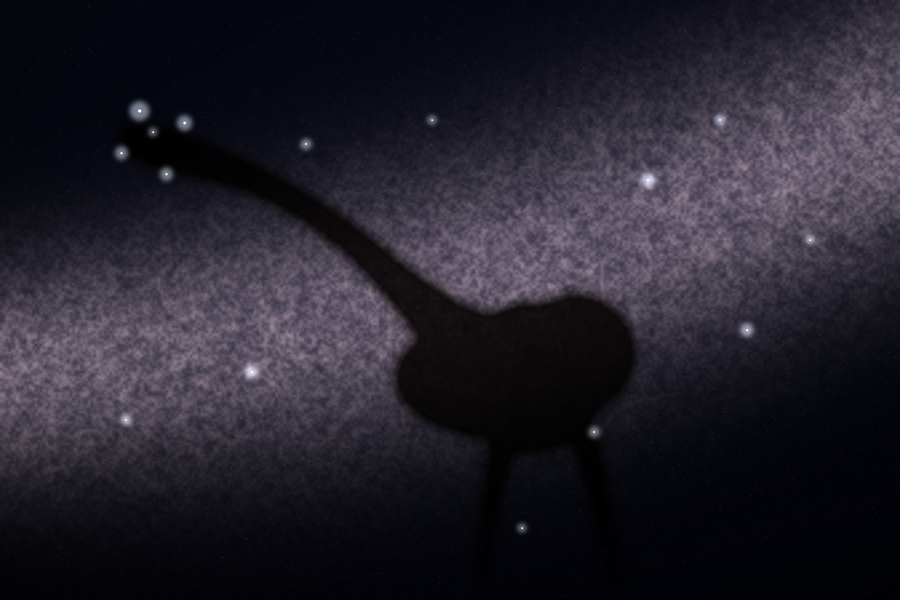
Nearly every constellation you were taught as a child is made by joining bright stars with imaginary lines. The Emu in the Sky is different. It is made from the dark patches — the great clouds of dust that block the starlight behind them.
Look for the Southern Cross, then find the inky smudge just beside it. That's the Coalsack, a cloud of cold dust and gas roughly 600 light years away, and it forms the emu's head. From there the neck and body stretch away through Scorpius and Sagittarius, right across the sky. Once your children see it, they will never un-see it.
This is one of the oldest astronomical traditions on Earth. Aboriginal nations across the continent have read this figure for thousands of generations — the Kamilaroi and Euahlayi peoples of New South Wales know it as Gawarrgay. It was never only a picture, either. As the emu's position shifts through the seasons, it signals when real emus are laying, and when eggs may be collected. A calendar written in dust.
Find the two bright stars near the Cross, often called the Pointers. The brighter one is Alpha Centauri, our closest neighbouring star system at about 4.3 light years. The light landing in your child's eye tonight left that star before they started school.
Then look for Antares, the fat red star at the heart of the Scorpion. It's a red supergiant, so vast that if you swapped it with our sun, it would swallow the orbit of Mars — Earth included.
It costs nothing. It happens every clear night. And you'll be sharing a sky that has been read, named and loved on this continent for longer than almost anywhere else on Earth.