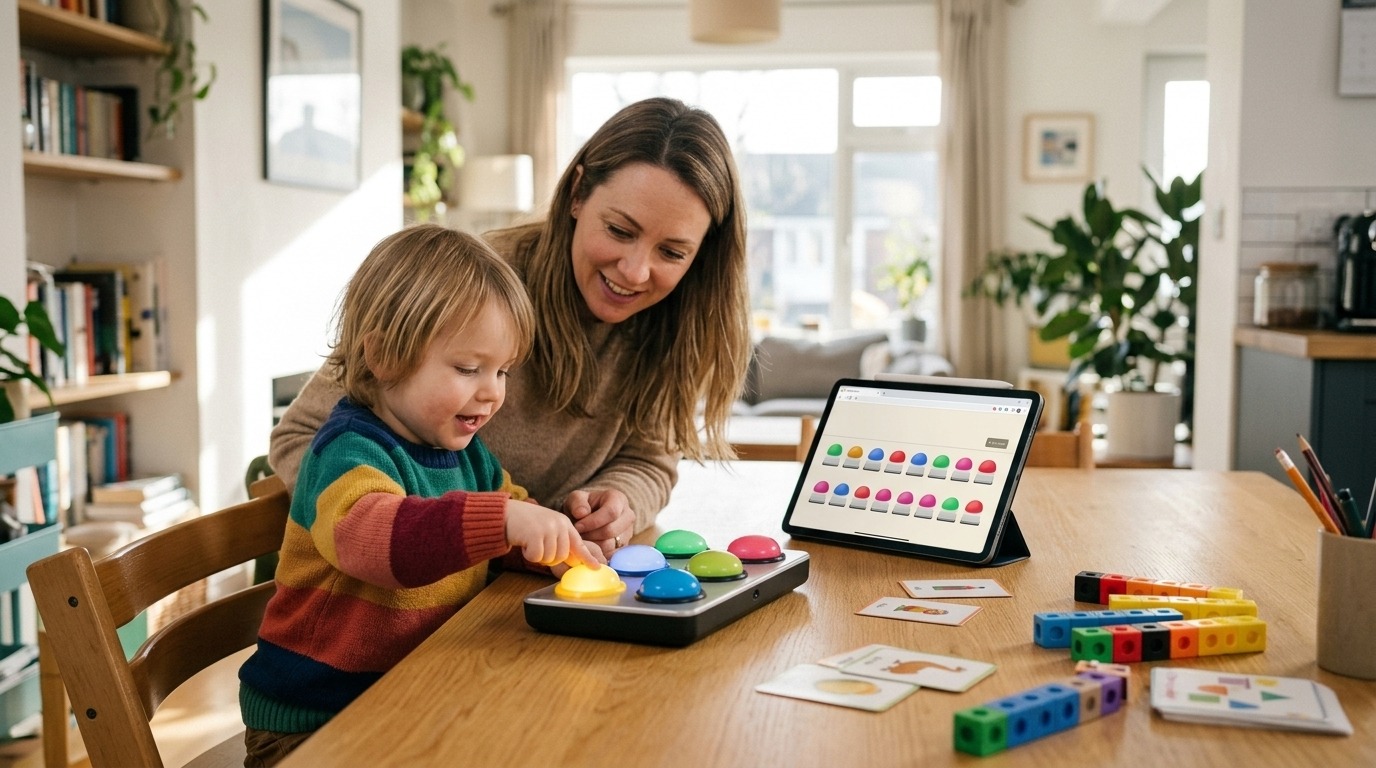
A single cheering sound can get a five-year-old to finish a puzzle they were about to quit. Kids react quickly and happily to fun sounds. Parents can use that reaction to make learning at home feel lighter.
Sound buttons are one of the simplest ways to do it. A tap plays a chime, a drum roll, or a round of applause. Those small sounds turn spelling, counting, and storytime into games. No special training or expensive tools are needed, just a few buttons and a little imagination.
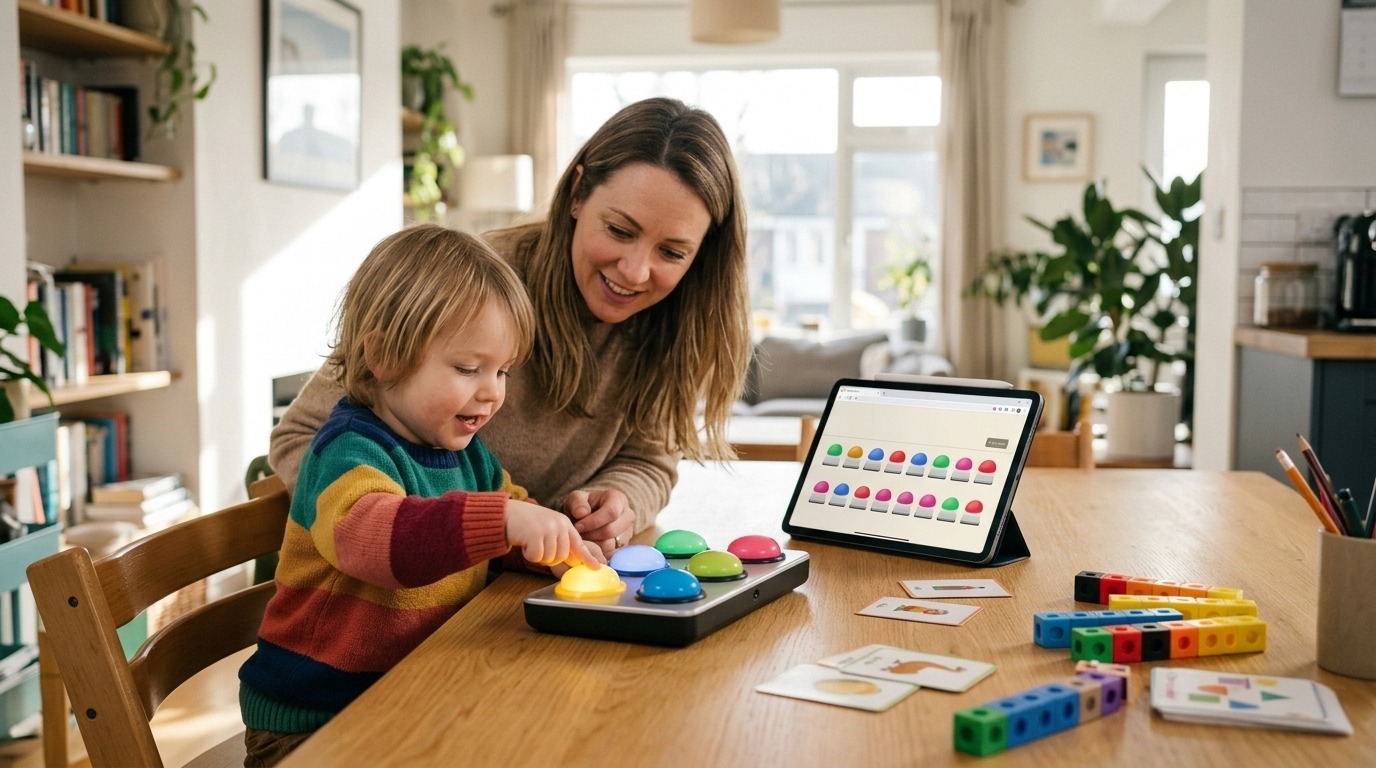
Children pay attention to what feels like play. According to Soundbuttonslab.com, where parents find free sound buttons for pronunciation practice, guessing games, and playtime, ‘when a lesson feels like a game, kids ask to play again instead of trying to finish early.’ That shift in attitude changes everything at home. A child who wants another round gets far more practice than one counting down the minutes.
Sound buttons also give quick feedback. A happy chime after a right answer tells a child they did well in that moment. Parents do not need to stop and explain every success. The sound does the cheering, while the parent stays focused on helping.
Home also has fewer rules than a classroom. Kids can be loud, silly, and creative. Sound buttons fit that relaxed setting perfectly.
Play is not just a break from learning. A 2022 review of 39 studies, published in Child Development, compared guided play with direct teaching. Guided play means children lead the fun while an adult gently steers it toward a goal. The review found guided play worked better for early math, shape knowledge, and switching between tasks.
For other skills, like early reading, guided play did about as well as direct teaching. That is still good news for parents. It means a fun game with a clear goal can teach as much as a sit-down lesson. Sound buttons fit this model well, because the parent sets the goal and the child drives the play.
The best home games use everyday objects and a few well-chosen sounds. Each one below takes only minutes to set up. Try rotating these four through the week:
Play an animal sound and ask your child to name the animal. Then ask what letter its name starts with. A cow becomes a lesson on c, and a duck becomes a lesson on d. Younger kids can act out the animal for extra fun.
Say a letter sound, like the s in sun. Your child runs to find something in the house that starts with that sound. When they bring it back, tap a cheering button. This game mixes movement with phonics, so wiggly kids stay engaged.
Read a picture book together and add sounds at key moments. A knock on the door, a drumroll before a surprise, or clapping at the happy ending brings the story to life. Kids listen more closely because they are waiting for the next sound.
Tap a button several times and ask your child to count the sounds. Then switch roles and let them tap while you count. This simple game builds number sense and listening skills.
Learning at home is not only about schoolwork. Routines like cleanup, getting dressed, and brushing teeth also teach responsibility. Sound buttons can make these daily tasks run more smoothly.
Try a ding to signal that cleanup time has started. Use applause when the last toy goes back in the box. A drum roll before bedtime can turn a struggle into a small celebration. Over time, kids link each sound with what comes next. That predictability helps them move between activities with fewer arguments. It also gives parents a calm, playful alternative to repeating the same instructions.
Many sound buttons live on phones or tablets, so screen time is a fair concern. The trick is keeping the screen in the parent’s hands, not the child’s. You tap the sounds while your child moves, talks, and plays.
Physical recordable buttons are another option. They let kids press real buttons without staring at a screen. Keep sessions short, around ten to fifteen minutes, and end on a high note. The goal is shared play with you, not solo scrolling. When the game ends, the device goes away, and the fun continues off-screen.
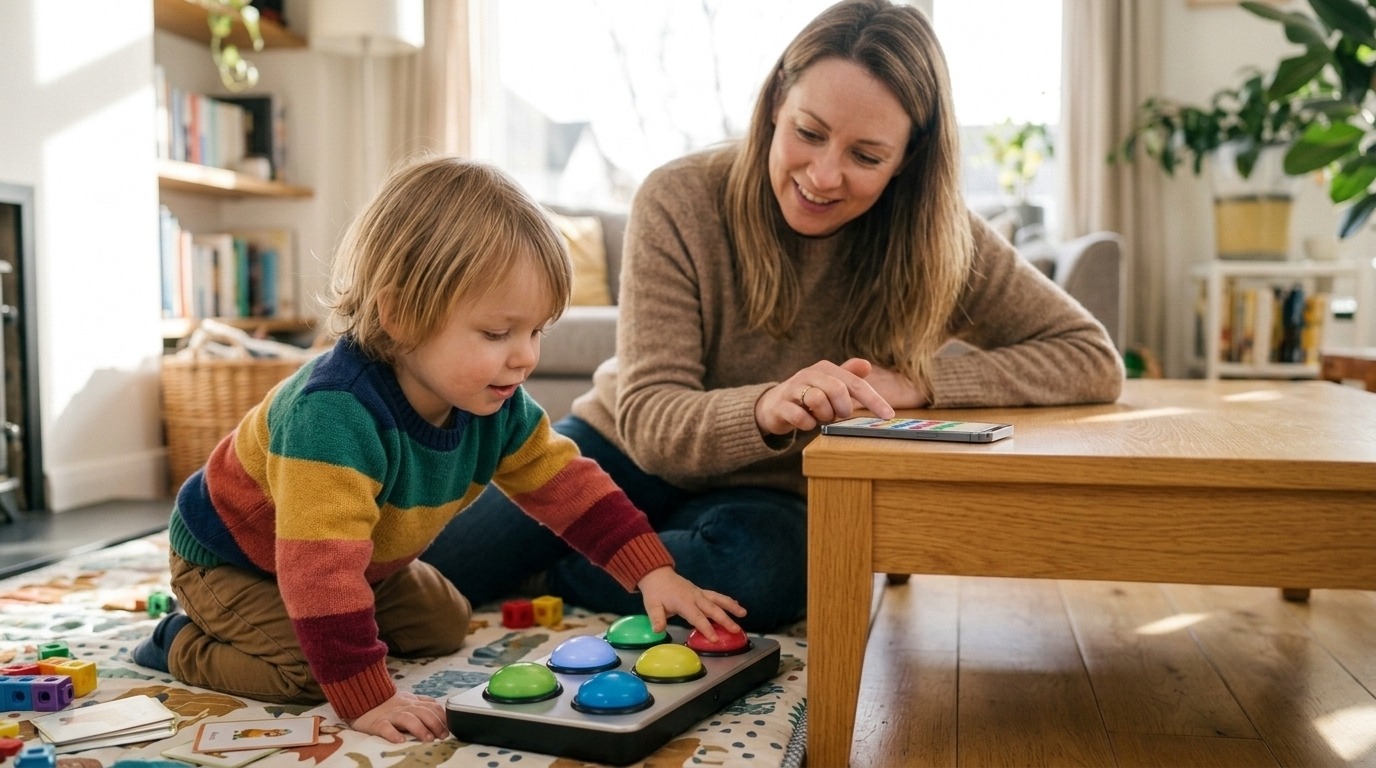
Sound buttons work best when they support the game, not take it over. A few common slips can turn fun into chaos. Watch out for these:
Keep the focus on connection and learning. When the sounds stay special, kids stay excited to hear them. A little restraint keeps the magic going for months, not days.